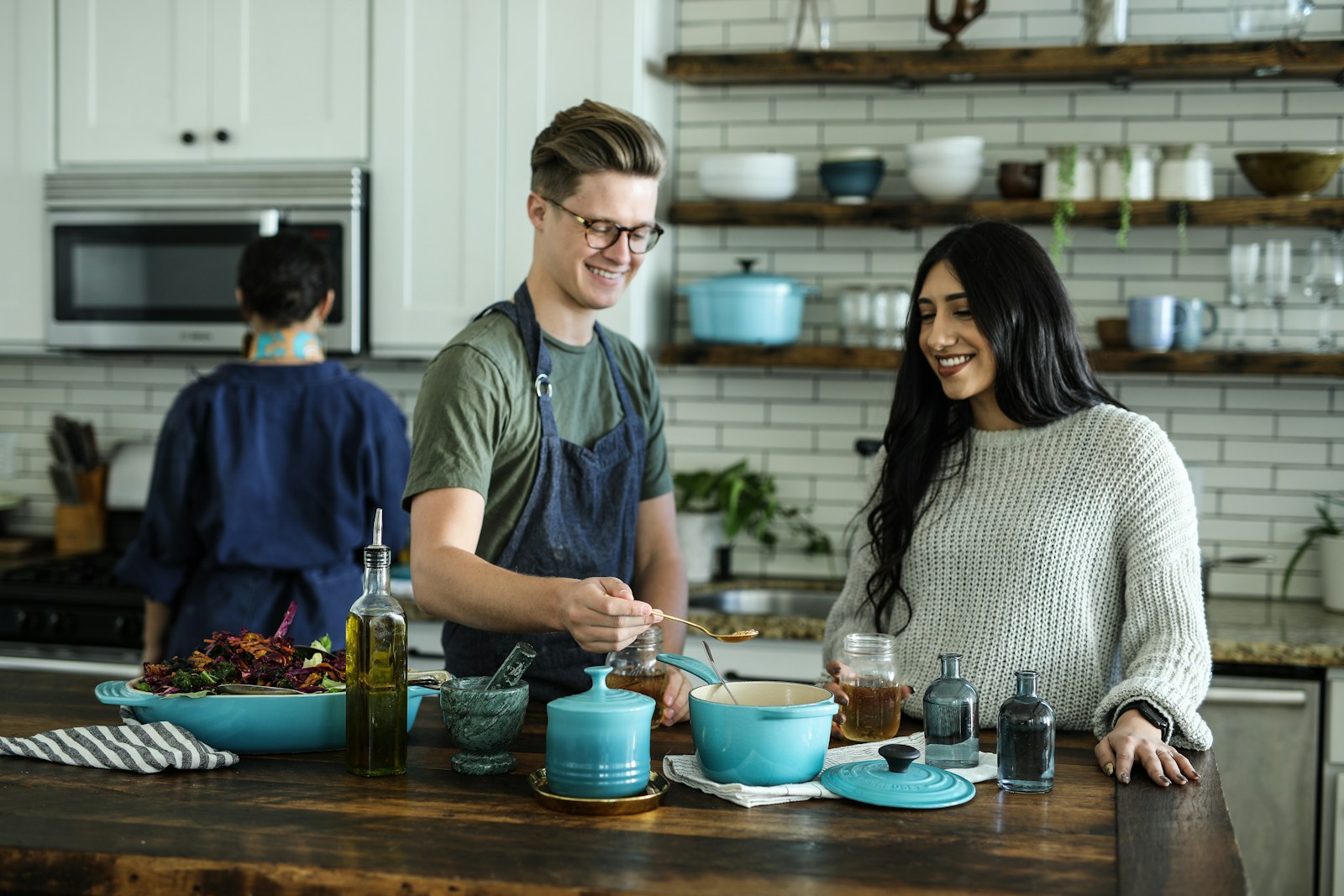
Food and cooking meetups in Berlin work because the table does a generous amount of social labour. People can chop, stir, taste, compare notes, laugh at a sauce that took a bold emotional direction, and talk without staring at one another like a networking exercise with snacks.
Berlin is brilliant for people who dislike polished small talk. It gives you parks, basements, studios, lakes, long tables, odd corners, and enough subcultures to make a normal Tuesday feel like a documentary. A cooking meetup fits that rhythm when it is practical enough for beginners and warm enough for strangers to become familiar faces.

The meal is not the whole point
The food matters, of course. Nobody joins a cooking meetup hoping to be emotionally transformed by a sad cucumber. But the real value is the shared activity: choosing ingredients, learning a small technique, tasting together, cleaning up, and leaving with a story that belongs to the group.
In Berlin, a strong cooking meetup should explain the format before people arrive. Is it a hands-on class, a supper club, a market walk, a picnic-style potluck, a beginner baking session, or a food walk? Each format creates a different social mood, and the reader deserves to know that before they cross the city hungry and hopeful.
What to check before joining in Berlin
- dietary notes and whether allergies are handled seriously
- cost, ingredients, and whether equipment is included
- group size, because six people cooking together and thirty people waiting for instructions are different evenings
- whether the activity is hands-on, demonstration-based, or mainly social
- the end time, because a lovely dinner can become less lovely when public transport has retired for the night
The city is spread out, so a meetup needs transport honesty. If the venue is forty minutes away and starts late, people deserve to know before optimism signs them up.
Think about places such as Kreuzberg, Neukolln, and Prenzlauer Berg, but judge the exact venue by noise, access, timing, and whether a newcomer can find the group without a treasure map.
Choose the format by your social energy
A market walk suits people who like movement and small conversations. A cooking class suits people who want structure. A supper club suits people who want a shared meal without pretending to be a chef. A potluck can be wonderful, but only when expectations are clear. Nobody should arrive with crisps and discover the room expected a childhood recipe with a speech.
For Berlin, useful formats include a beginner pasta or rice dish session, a local market ingredient walk, a simple baking table, a picnic where people bring one labelled dish, or a small cultural food night where the story behind the dish matters as much as the recipe.

The host sets the tone
A good host does not need to perform celebrity-chef energy. They need to explain the plan, keep food safety sensible, name dietary boundaries, give quiet people a job, and make cleanup part of the rhythm. The host should also protect the room from the person who turns garlic into a personality test.
A strong sign is not fancy food. It is whether people know what to do next. A clear table lowers awkwardness. Someone washes herbs. Someone slices bread. Someone asks where the bowls are. Suddenly conversation has a reason to exist.
Make the invitation specific
A useful food listing in Berlin should name the dish, skill level, price, dietary boundaries, and the shape of the evening. "Come cook together" sounds friendly, but it leaves too much work for the reader. "Beginner dumpling night with labelled vegetarian options and a shared table after cooking" gives the nervous person a door they can actually walk through.
Specificity also helps the group avoid the strange social fog that happens when people arrive with different expectations. One person thinks it is a lesson. Another thinks it is dinner. A third has arrived with a casserole large enough to negotiate peace treaties. Clear wording saves the evening before the first onion is chopped.
For searchers comparing food meetups in Berlin, this is also where local usefulness beats generic advice. Mention whether the meetup begins near a transit stop, whether the space is quiet enough to talk, whether ingredients are bought together, and whether the group cleans up as part of the experience. These details do not sound glamorous, but they are what people remember when deciding whether to return.
How to arrive without making it complicated
Read the listing carefully. Bring what it asks for. Do not surprise a group with unlabelled food if allergies are involved. If the meetup is a class, arrive on time. If it is a potluck, ask what gap you can fill. If it is a food walk, wear shoes that can survive more than one charming detour.
A food meetup is also a useful test of compatibility. You learn who shares, who listens, who asks questions, who can laugh at a small kitchen disaster, and who treats the last piece of bread like a diplomatic crisis. These tiny signals are part of why food can build real hobby friendships.
Food hobbies can be small and still meaningful
Not every food hobby in Berlin needs a dramatic chef's table. A two-person bakery walk, a beginner spice tasting, a coffee-and-recipe swap, or a picnic built around one seasonal ingredient can be enough. Smaller formats are often easier to repeat, and repetition is where a casual evening starts becoming a familiar circle.
The emotional part is simple: people relax when they are useful. Passing a bowl, asking for a knife, tasting a sauce, or laughing at a slightly ambitious dessert gives conversation a reason to move. That is why food hobbies can work for people who dislike forced socializing. The activity carries the first few minutes, which are usually the hardest part.
If the goal is to make friends in Berlin, the question is not only whether the food was good. Ask whether people learned names, whether the host made room for newcomers, whether the cost felt fair, and whether the next gathering was easy to imagine. Those signals matter more than a polished photo of dinner.
Keep the first event gentle
If you are starting with food hobbies in Berlin, choose a format that can succeed without heroic planning. A simple pasta night, a market-to-picnic walk, a beginner baking table, or a coffee-and-recipe swap gives people a clear reason to show up. It also keeps the stakes low enough for people to admit they are new, curious, rusty, or mainly there because dinner with friendly strangers sounds better than another evening negotiating with the fridge.
A gentle format does not mean a lazy one. It means the host has removed avoidable confusion: where to meet, what to bring, what will be cooked, how costs are handled, and how the group deals with dietary needs. When those details are visible, the reader can focus on the activity and the people instead of decoding the evening like a mystery novel with cutlery.
Where Kumele fits after the guide helps
This article should help readers judge food and cooking meetups first. Kumele becomes useful when someone wants compatible local hobby friends nearby, matched around hobbies, age, and location, so a food interest can become a real-life plan rather than another saved recipe.
Pair this with Complete Berlin hobby guide, New to Berlin hobby meetups, and Berlin activity groups.
Useful local checks for Berlin
Check venue access, market opening times, public transport, kitchen rules, food hygiene expectations, and whether the organizer has enough detail for newcomers. These local resources can help readers compare areas and plan sensibly.
A grounded first step
Choose one food or cooking meetup in Berlin with clear costs, clear dietary notes, and a format that matches your energy. If you leave with one new flavour, one useful tip, and one person you would eat with again, the evening has done its work.
This guide supports readers searching for food meetups Berlin, cooking classes Berlin, supper clubs Berlin, and hobby meetups Berlin with practical, reader-first advice.
Join the early hobby matching waitlist in your city
Join the early hobby matching waitlist in your city. Choose your city and the hobbies you want to try so Kumele can see where local demand is strongest first.
Start with the hobby groups near me guide, the hobby friends guide, or the main hobby guide.
Plan your next hobby step
Keep going with Kumele’s core guides: hobby ideas, hobby groups near me, hobby friends, and the city homepage.