Berlin is a city where people will tell you the truth.
Which is great for climbing, because climbing also tells you the truth. Immediately. Usually with your forearms.
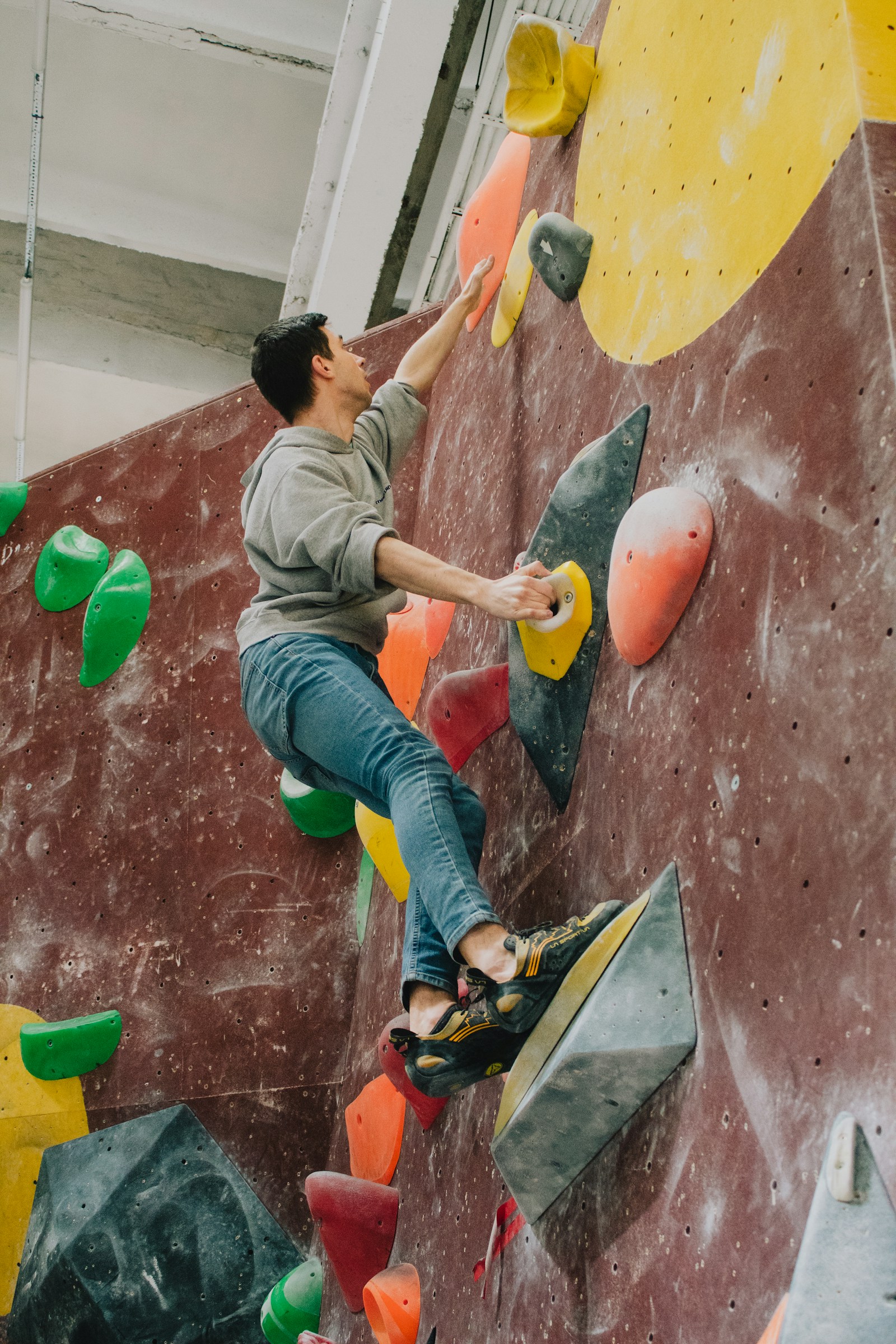
If you’re searching “climbing gym Berlin”, you’re probably in one of two moods:
1) “I want a hobby that makes my brain quiet.” 2) “I would like to meet people, but I do not want to attend a loud party.”
Climbing gyms are excellent for both. This guide explains how to start as a beginner (bouldering vs rope), what your first session is like, etiquette, and how to find climbing buddies in Berlin without crossing safety boundaries.
Quick answer: bouldering or rope climbing for beginners?
If you want the simplest entry, start with bouldering.
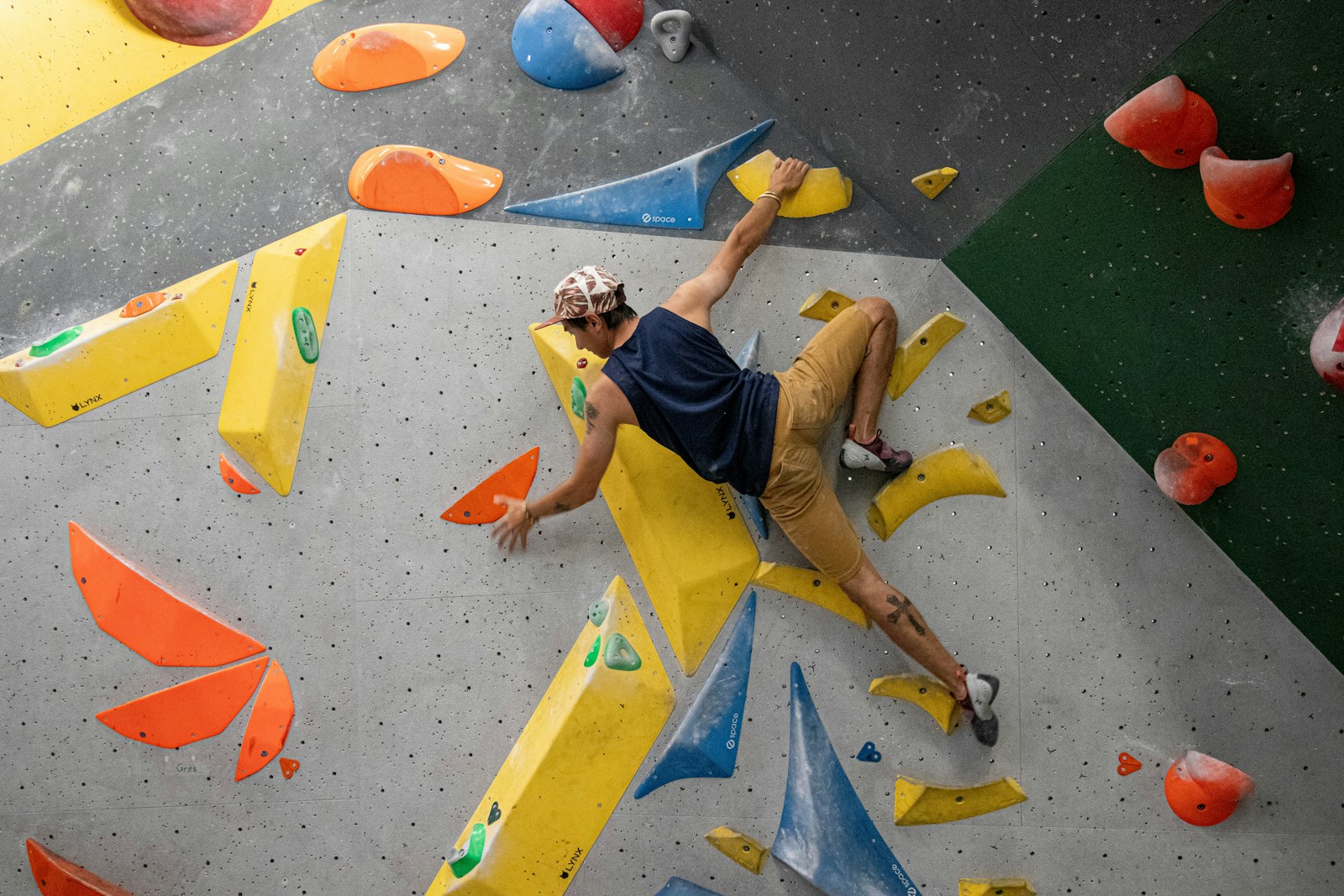
Why bouldering is beginner-friendly:
- no ropes or harness required
- you can start immediately
- falls are short (with proper technique and mats)
- it’s social in a low-key way (people rest between attempts)
Rope climbing is also great, but it usually requires:
- a belay partner
- a belay course/competency check
- more setup
If you’re new and going alone, bouldering is often the easiest first step.
What your first climbing gym visit feels like
Expect:
- a quick orientation at the front desk
- rental shoes that feel weird (normal)
- confusion about “colors” and “routes” for 10 minutes (also normal)
- then: the satisfying moment where you solve a problem and feel proud for no reason other than gravity
Climbing is part puzzle, part strength, part technique, part “why are my fingers tired?”
And if you’re worried you’ll look silly: everyone looks silly in climbing shoes. It’s fine.
Berlin-specific: the climbing gym vibe
Berlin gyms often have a direct, focused atmosphere:
- people take their training seriously
- no one cares if you’re a beginner as long as you’re respectful
- you’ll see every style: hardcore training, casual after-work climbers, and people who treat it like moving meditation
The city’s social rule applies here too: Be real, be calm, don’t perform.
Basic climbing etiquette (this is what keeps gyms friendly)
Climbing gyms are shared spaces. A few habits make you instantly “good gym energy”:
- look up before you climb (don’t climb under someone)
- don’t stand in the landing zone of a boulder problem
- take turns if a route is popular
- ask before giving advice (“Want a tip?” is polite)
- keep chalk and gear tidy
If you’re unsure, watch how people rotate on a wall and follow the flow.
Beginner technique: what matters more than strength
Most beginners think climbing is arms.
It’s mostly:
- feet placement
- body position
- balance
Three starter tips that help immediately:
1) use your legs (stand up more than you pull) 2) keep your hips close to the wall when possible 3) move slowly and intentionally on easier routes
If you focus on controlled movement, you’ll improve faster and avoid injury.
A simple first-session plan (so you don’t overdo it)
Climbing is sneaky. You feel fine… until you don’t.
Try this:
1) warm up (5–10 minutes): easy routes, shoulder circles, wrist prep 2) climb easy problems/routes for 30–45 minutes 3) stop before you feel destroyed
Leaving with energy is a skill. It keeps you coming back.
How to meet people at a climbing gym in Berlin (the non-cringe way)
Climbing is social because people rest and observe between attempts.
Easy openers:
- “Have you tried this one?”
- “Do you know the beta for the start move?” (beta = how to do it)
- “Is there an easier version of this style of problem you like?”
If you’re a beginner, you can be honest: “I’m new — I’m trying to learn how to not fight the wall.”
People usually relate.
The best social move: celebrate someone else’s send
A simple: “Nice!” does a lot.
Finding a belay buddy (safely)
If you want to rope climb, you’ll eventually need a belay partner.
Good steps:
- take a beginner rope/belay course
- ask your gym about partner boards or beginner meetups
- build familiarity first (see the same faces regularly)
Important: don’t pressure strangers into safety-critical partnerships immediately. Keep it calm. Build trust over time.
What to wear and bring
Basics:
- comfortable athletic clothing
- water
- optional: small snack (climbing can be hungry work)
Shoes: rentals are fine at first. If you get hooked, buying shoes later is the upgrade that makes a difference.
Bouldering falls (how to do them like a normal human)
If you boulder, you will fall. The goal is falling safely.
Beginner habits that help:
- don’t climb directly under someone
- keep your landing zone clear
- when you drop, try to land with soft knees and control
- avoid twisting to “save” a move when you’re already off-balance
If you’re unsure, ask staff for basic falling tips. It’s a common question, and it makes you safer fast.
Injury prevention (quick and real)
Two common beginner mistakes:
- doing too much too soon
- trying the hardest moves when tired
Protect your fingers/shoulders:
- warm up
- stop when form gets sloppy
- take rest days
Climbing is a long game. The goal is being the person who still climbs next year, not the person who “went once and now has a mysterious elbow problem.”
If you feel gym anxiety (very normal)
Climbing gyms can feel intimidating because everything looks like a private language: grades, colors, “beta,” chalk, shoes, people hanging upside down like it’s casual.
A beginner-friendly approach:
- start on the easiest problems/routes available
- take longer rests than you think you “should”
- ask staff for a quick orientation if you feel lost
Most gyms would rather help you feel safe than watch you guess.
A social “go alone” plan (Berlin-friendly)
If you’re going alone and want to meet people without forcing it:
1) show up at a consistent day/time 2) warm up near the easier areas (more beginners, more conversation) 3) ask one simple question per session (“Have you tried this one?”)
Berlin social life often rewards familiarity. Your second and third visit are where things start to open up.
Should you take a beginner class?
If you’re the kind of person who likes clear structure, a beginner class is often worth it because it:
- teaches safe basics (especially for ropes)
- helps you understand gym rules faster
- introduces you to other beginners automatically
If you prefer learning by doing, bouldering plus a quick staff orientation can also work. The key is picking a path you’ll repeat.
Quick answers
Can I go to a climbing gym alone?
Yes, especially for bouldering. Rope climbing typically requires a partner (or an auto-belay wall, if available).
Is climbing expensive?
It varies (day passes, memberships, rentals). Many people find it worth it because it combines fitness, learning, and community.
I’m not strong. Should I wait?
No. Technique matters. Start with beginner routes, build gradually, and your strength will follow.
Do I need chalk?
Some people love it, some people don’t. Many gyms allow chalk (sometimes only liquid chalk). If you’re new, you can start without it and add it later if your hands feel slippery. If you do use chalk, use a little at a time — the goal is grip, not turning into a ghost.
What should I do on my very first visit?
Keep it simple: rent shoes, warm up on the easiest problems, take long rests, and leave while you still feel good. Your goal is to make climbing feel repeatable, not to prove anything on day one.
Keep exploring Berlin
- Berlin homepage: https://berlin.kumele.com/
- Berlin blog: https://berlin.kumele.com/blog/
The detail that makes showing up easier
Before choosing a creative workshop, look for the detail that would make you comfortable enough to return: the exact meeting point, the expected level, the likely group size, and whether the plan still works if you arrive alone. In Berlin, that practical layer matters because a hobby is not just an idea; it has to fit transport, timing, weather, energy, and the small courage it takes to walk in for the first time. That kind of clarity makes the first visit feel less like a gamble.
Let the first visit be simple
A sensible first step for climbing gyms in Berlin is to choose the beginner-friendly version and let pride take the evening off. In Berlin, that might mean a shorter route, a slower pace, a smaller court, a coached session, or a group that clearly explains what happens when people arrive.
The repeatability test
The best sign is not perfection. It is whether you leave with one small reason to return: a person you would recognise, a route you enjoyed, a skill you want to practise, or a place that felt easier the second time in your imagination. Climbing gyms in Berlin works best when the second visit feels possible before the first one has even fully settled.
One human way to start
A good start in Berlin can be very small: arrive, learn one name, follow one route, make one thing, ask one question, or stay until the end without mentally drafting an escape plan. For climbing gyms in Berlin, that kind of modest win is often the beginning of real confidence.
Next step
Pick one gym with an obvious beginner path, rent the gear, and let the first session stay simple. If you leave wanting to try one more route next week, the gym has already done its job.
Join the early hobby matching waitlist in your city
Join the early hobby matching waitlist in your city. Choose your city and the hobbies you want to try so Kumele can see where local demand is strongest first.
Start with the hobby groups near me guide, the hobby friends guide, or the main hobby guide.
Plan your next hobby step
Keep going with Kumele’s core guides: hobby ideas, hobby groups near me, hobby friends, and the city homepage.
For another active way to meet people, see language exchange in Berlin.