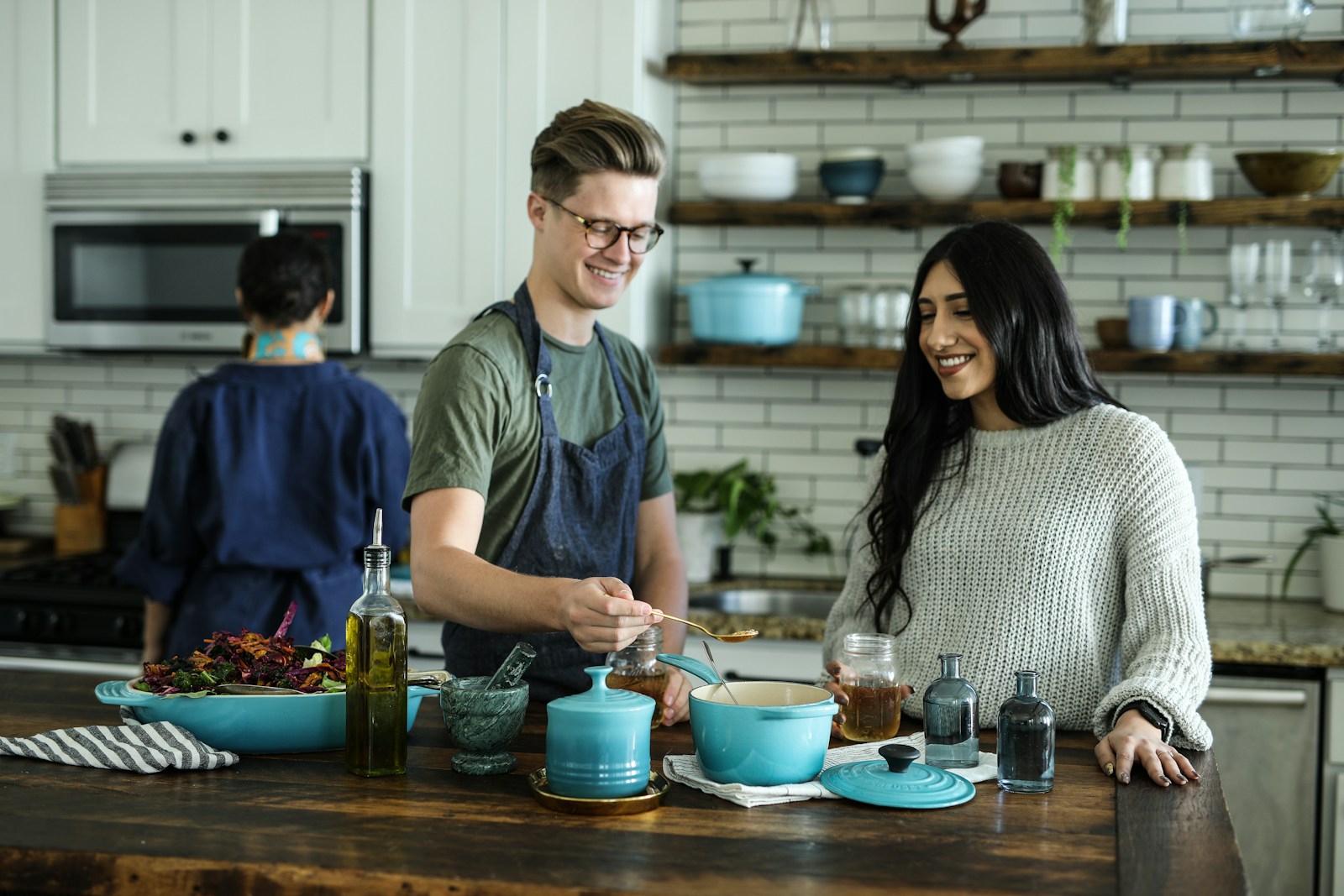
Cooking as a hobby in Berlin does not have to begin with expensive knives, a twelve-course ambition, or the belief that one badly shaped dumpling has exposed your character. It can begin with one repeatable evening, one dish you genuinely want to eat, and one person you would not mind sharing a kitchen with.
The difference between cooking as a chore and cooking as a hobby is usually attention. A chore asks, “How quickly can I feed myself?” A hobby asks, “What would be interesting to learn next?” Both questions belong in a real week. The aim is not to turn every Tuesday dinner into theatre. It is to give curiosity a regular place on the calendar.

This four-week plan is built for beginners, newcomers, and busy Berliners who want a practical skill with social potential. You can do it alone, with a flatmate, or with a small group. The weekly goal matters more than cooking every day.
Week one: choose one technique, not a whole cuisine
Start with a technique you can reuse. Roasting vegetables, making a simple soup, cooking rice well, building a pasta sauce, or learning a basic dough will teach you more than chasing five unrelated recipes.
Pick one evening when you are not already exhausted. Buy the ingredients before that evening if possible. Read the full recipe once, put everything on the counter, and notice which part feels unfamiliar. That may be knife work, heat control, timing, seasoning, or simply the strange domestic choreography of using three pans without losing one under a lid.
Afterwards, write down three things:
- what worked
- what you would change next time
- which part you enjoyed enough to repeat
This tiny note turns dinner into practice. It also prevents the classic beginner problem of making something surprisingly good and having no idea how you did it.
Week two: repeat the dish with one deliberate change
Repetition is where a hobby begins. Make the same dish again, but change one variable: a spice, a vegetable, the cooking time, the sauce, or the way you serve it. Do not redesign everything at once. If six things change and the result is odd, the kitchen has given you a mystery rather than a lesson.
This is also the week to invite one person. Keep the invitation light: “I’m learning this dish on Thursday. Want to help cook and eat it?” That is easier to accept than a grand dinner party. A shared task gives conversation somewhere to go, and a modest plan makes imperfect food much less dramatic.
If nobody is free, cook anyway. A social hobby needs a skill underneath it. You are building something that can later travel into a class, supper club, cookbook circle, neighbourhood kitchen, or regular evening with friends.
Week three: try a Berlin class or community format
Berlin gives you several ways to learn without pretending you are applying to culinary school. The Berlin Volkshochschule cooking programme lists practical cooking and baking courses across the city’s adult education centres, including basic, vegetarian, vegan, and weekend formats. Check the current course details, language, price, accessibility, and available places before booking.
For a more social format, look for community kitchens, shared cooking sessions, neighbourhood centres, and small-group workshops. The visitBerlin Healthy Cooking listing, for example, describes a current Staaken course where participants cook in small groups and eat together. Event details can change, so treat it as a live lead to verify rather than a permanent promise.
Choose a format that answers the nervous questions clearly:
- Is it suitable for beginners?
- Which language will the host use?
- Are ingredients and equipment included?
- Will participants cook together or mainly watch?
- Is the location realistic for a return visit?
- Does the group meet again?
A one-off class can teach a technique. A repeating group has more chance of producing familiar faces. Decide which result you want before you book.

Week four: turn the lesson into a repeatable social ritual
Use what you learned to create one small rhythm. It could be a monthly cookbook night, a Sunday batch-cooking hour with a neighbour, a dumpling experiment with two friends, or a rotating dinner where each person brings one component.
Keep the first version almost comically manageable. Four people are easier than fourteen. One main dish is easier than a theme with handmade menus. A two-hour window is easier than an event that quietly claims the whole weekend.
Give everybody a job. One person shops, one chops, one handles music, one keeps an eye on the oven. Shared responsibility makes the evening feel collaborative and reduces the chance that the host spends three hours cooking while everyone else offers moral support from a chair.
At the end, decide whether to repeat it. Put the next date in the calendar while the dishes are still drying. “We should do this again” is warm but slippery. A date turns warmth into a plan.
How to find the right people for a cooking hobby
Start with the social radius you already have: a colleague who talks about food, a neighbour who bakes, a flatmate who wants to learn, or somebody from a language class who misses a dish from home. Then widen the search through local hobby groups, adult education courses, community centres, cultural associations, and city event pages.
Look for compatibility beyond liking food. Distance matters. Schedule matters. Group size matters. One person may want serious technique; another may want a relaxed meal and company. Neither is wrong, but the formats are different.
Kumele is being built around that practical mix of hobbies, age, location, and real-life activity. The goal is not another feed of dishes you will never cook. It is a clearer route toward people nearby who might actually turn up, chop an onion, and come back next month.
Keep food safety and access in the plan
Ask about allergies and dietary needs before buying ingredients for a group. Keep raw and cooked foods separate, follow storage instructions, and do not improvise around a serious allergy. If you are attending a public class, check accessibility, language, cost, and whether the venue can accommodate your needs.
Budget also matters. A cooking hobby does not need rare ingredients every week. Choose techniques that work with ordinary seasonal produce, plan around what you will actually eat, and freeze leftovers when appropriate. A hobby should add pleasure and skill, not a recurring financial hangover.
What to do when the dish goes wrong
Treat a disappointing result as information, not a referendum on whether you are a “cooking person.” If the dish is bland, test salt, acid, texture, or cooking time one at a time. If something burns, write down the heat level and the moment you stopped watching it. If the recipe itself is unclear, compare it with a reliable version before blaming your hands.
Keep a low-stakes backup meal available on practice nights. Bread, eggs, frozen dumplings, soup, or a simple sandwich can rescue dinner without turning one failed sauce into a small household emergency. The goal is to return next week with a better question. Hobby confidence is rarely the absence of mistakes; it is the knowledge that one awkward plate does not end the experiment.
Your next step in Berlin
Choose one dish and one evening in the next seven days. In week two, repeat it with one change. In week three, verify one current Berlin class or community cooking option. In week four, invite a small group and put the next date in the calendar.
For the wider path, use Kumele’s guides to finding a hobby, making food and cooking a hobby, locating hobby groups near you, and meeting local hobby friends.
Then join the early hobby matching waitlist in Berlin. Add the hobbies you want to practise and help show which kinds of local groups should come first. One good meal is lovely. A reason to cook together again is how the hobby becomes a community.